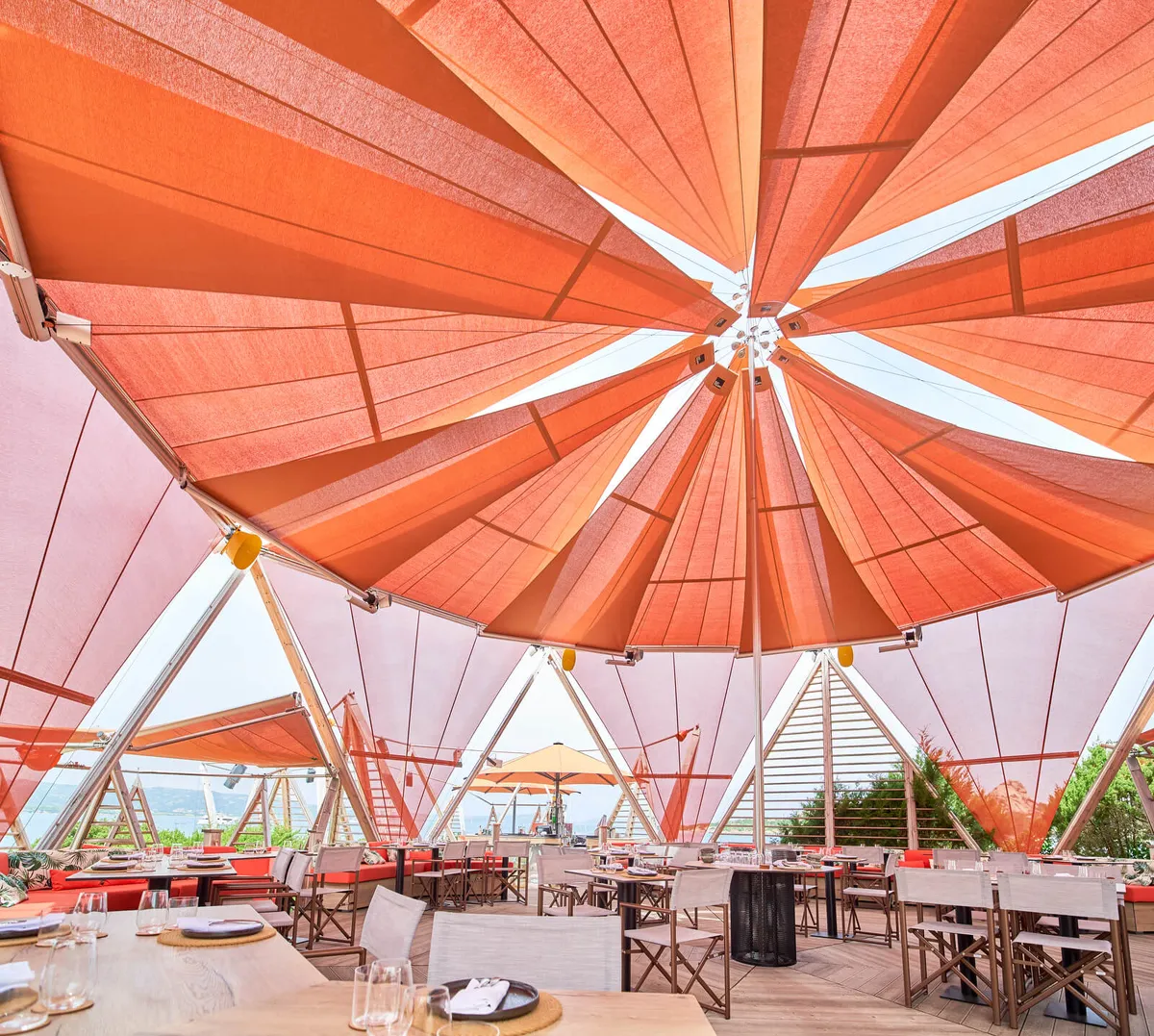
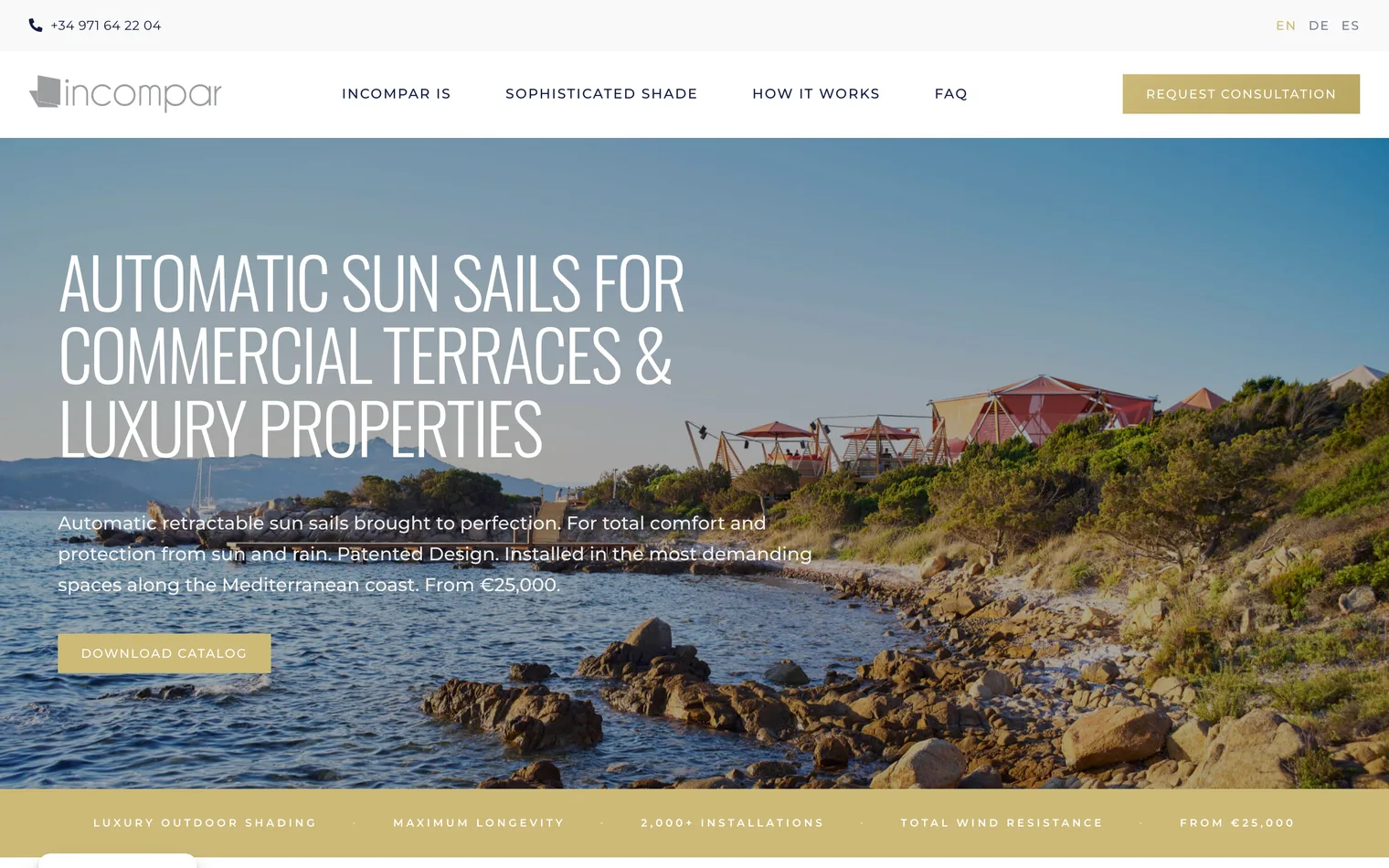
Incompar builds engineered sun sails for villas, hotels and beach clubs across the Balearics. The product is architectural and the photography is commissioned, not stock. So the site had one job above all others: let the pictures do the selling.
It wasn’t doing that job. Of the 56 images on the old homepage, 28 shipped with a one-pixel transparent placeholder in the src attribute and the real file parked in data-src, waiting on JavaScript. A person with a browser saw the photography. A crawler saw nothing. On a site where the photography is the argument, that is not a technical detail. It is the whole product, missing.
German at the root
The second problem was structural, and less obvious. The old site served German at the root, with English and Spanish as subfolders. That made sense for the business it had been. It made no sense for the one it was becoming, which sells to architects specifying projects from Munich, London and Madrid.
So English moved to the root and all three languages were built as equals rather than as translations hanging off a primary.
That is a real decision with a real cost, and it is worth being honest about the cost. Moving the root language means every indexed URL changes. Search Console gets noisy for weeks. Anyone who tells you a migration like that is free is either not counting or not telling you.
Translation is not localisation. A German page run through Spanish still sells like a German page, so each language was written to its own rhythm rather than pushed through a translation memory and signed off.
What got built
About 30 pages in each of the three languages, project pages included. A typography system that lives in a single stylesheet, so a change to the heading scale is one edit rather than one per page. Ten long-tail guide pages, each written for a real question a buyer actually types, published across all three languages. Structured data for the organisation, the FAQ content and the individual projects.
On the method
I built this with an AI coding agent doing the repetitive work: bulk edits across dozens of pages, link rewrites, verification passes that would otherwise be a day of clicking. When page addresses changed, every hardcoded link had to follow, and each one was checked rather than assumed.
What the agent did not do is decide anything. It did not choose to move English to the root, judge which photograph carries a page, or decide that each language gets its own rhythm. Twenty years of doing this decides that. The tooling just means the decision reaches the page the same afternoon.
Half the photography on a photography-led site was invisible to the one visitor that decides who finds it.
Have a project like this one?
Tell me what you're planning. I'll tell you honestly whether I can help, and what it would take.
Tell me your project →You'll deal with me directly, from first call to final delivery.