Why Finding an English-Speaking Web Designer on the Costa Blanca Is Harder Than It Should Be
You moved to the Costa Blanca. You set up your business, you’re ready to be found online, and then you start asking around for a web designer. What you find is a mix of cheap template mills, local Spanish agencies with limited English, and remote freelancers who have never set foot in Spain and don’t understand the market you’re trying to reach.
This is the gap most expat entrepreneurs fall into. The local options don’t understand your audience. The remote options don’t understand your location. And the gap between the two is where your online presence quietly fails.
FRAMEONE MEDIA DESIGN exists in that gap, on purpose.
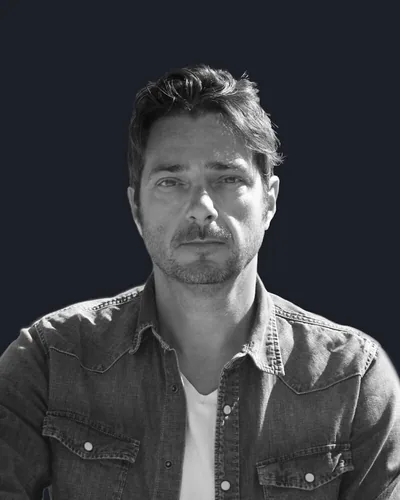
Based in Dénia, in the heart of the Marina Alta, I work with English-speaking expats and international businesses all along the Valencia-Alicante coastline. From Jávea and Moraira to Calpe, Altea, Benidorm, and Alicante, I design websites and brand identities that work for audiences who are often English-first, sometimes German, and navigating a Spanish-speaking environment.
What “Expat-Friendly” Actually Means in Practice
It’s a phrase that gets used loosely. For me, it means something specific.
It means every conversation happens in English, without you having to simplify your ideas or repeat yourself because of a language barrier. It means I understand what British, Irish, and international clients expect from a professional web presence, because I work with them directly and I’ve seen what the alternatives produce. It means I know what your Spanish neighbours, suppliers, and customers expect too, because I live and work here and I conduct business in Spanish every week.
A website built by someone who only understands one side of that equation will show its limitations fast. Either it looks polished to an international eye but misses local search entirely, or it ranks locally but reads like a machine translation and loses the trust of the English-speaking customers you actually want.
Getting both right requires someone who operates in both worlds. That’s the work I do.
Local SEO That Goes Beyond “Costa Blanca Web Design”
Ranking on Google when someone searches for your service in your area is not complicated in principle. You need a technically sound site, clear content, and consistent signals that tell search engines where you are and who you serve. In practice, most expat business websites fail on all three.
The location problem is especially common. A site might mention “Spain” or even “Alicante province” without ever specifying the towns where the business actually operates. For a property consultant based in Jávea, a yoga studio in Dénia, or a private chef serving Moraira and Benitachell, that vagueness is costing real visibility.
I build location signals directly into the structure of each site: the page copy, the metadata, the headings, the internal linking. Not as a box-ticking exercise, but because a site that ranks for “interior designer Jávea” or “English-speaking accountant Dénia” is a site that brings in genuinely relevant enquiries.
The same logic applies to bilingual and trilingual search. Your customers may be searching in English. Their Spanish partner may be searching in Spanish. A German retiree down the road may be searching in German. A site designed for one language and one search pattern leaves the others untouched.
The Specific Towns I Know Well
The Costa Blanca is not one market. Dénia and Jávea attract a different mix of residents and visitors than Benidorm or Torrevieja. Altea draws a different kind of buyer than Calpe. Understanding these differences shapes how I write copy, structure pages, and think about what trust signals matter most to the audience a given business is trying to reach.
My work covers the full Valencia-Alicante coastline, with particular depth in the Marina Alta: Dénia, Jávea, Moraira, Calpe, Altea, Benissa, Teulada, and Benitachell. I know these towns as places I live near, eat in, and navigate daily. That’s not a marketing point. It’s context that shows up in the work.
A Clear Process, From First Conversation to Launch
One of the recurring complaints I hear from expat business owners who’ve worked with other designers is that the process was opaque. They weren’t sure what was happening, when to expect feedback, or what they were responsible for providing. The project dragged. The result was not what they imagined.
My process is straightforward by design.
A project starts with a strategy conversation: what your business does, who it’s for, what you need visitors to do when they land on your site, and what you’re currently missing. From there I produce a clear structure before any visual design begins, so we’re agreed on what the site actually needs to achieve before anyone talks about colours or fonts.
Design and content development happen together, not sequentially. This matters because the way a page is written shapes the way it needs to be laid out, and vice versa. Treating them as separate stages produces sites where the design and the copy fight each other.
Once the site is built, I walk you through it before anything goes live. You know how to update basic content yourself. You have documentation that doesn’t require a developer to interpret. And if something needs adjusting after launch, you know exactly who to contact, because I’m the person who built it.
There’s no account manager passing messages between you and a junior designer you’ve never spoken to. One person, the same person throughout, which is how the work stays consistent and how nothing gets lost in translation.
Why This Matters More on the Costa Blanca Than Almost Anywhere Else
The Costa Blanca has one of the highest concentrations of expat entrepreneurs in Spain. There are thousands of small businesses run by British, Irish, German, and other international owners between Valencia and Torrevieja, and most of them are competing in markets where trust is the deciding factor.
Your customers are choosing between three property agents, five yoga teachers, or a dozen private chefs. They can’t easily visit each one first. They go to the website. They read the copy. They look for signals that tell them whether this business understands them, whether it’s professional, whether it’s worth contacting.
A site that looks like it was built in 2015, or that reads like a rough translation, or that ranks nowhere on Google, doesn’t just lose traffic. It actively costs you the trust of people who were ready to become customers.
Professional web design on the Costa Blanca is not a luxury category. For an expat-run business operating in a competitive and multilingual market, it’s the difference between being found and being invisible.
If you’re ready to have that first conversation, start by telling me about your business and what you’re trying to build. I’ll come back to you in plain English, without jargon, and we’ll work out whether we’re a good fit.
Start a project with FRAMEONE. Reach out through the contact page and let’s map out your next steps.